About us
We are rebuilding the outdated food system into a global, climate-resilient, nutrient-dense agri-food supply chain.
Mission
We put nutrient density at the centre of the food system
Vision
Nutrient density of the food will be the new quality definition.
Why nutrient density?
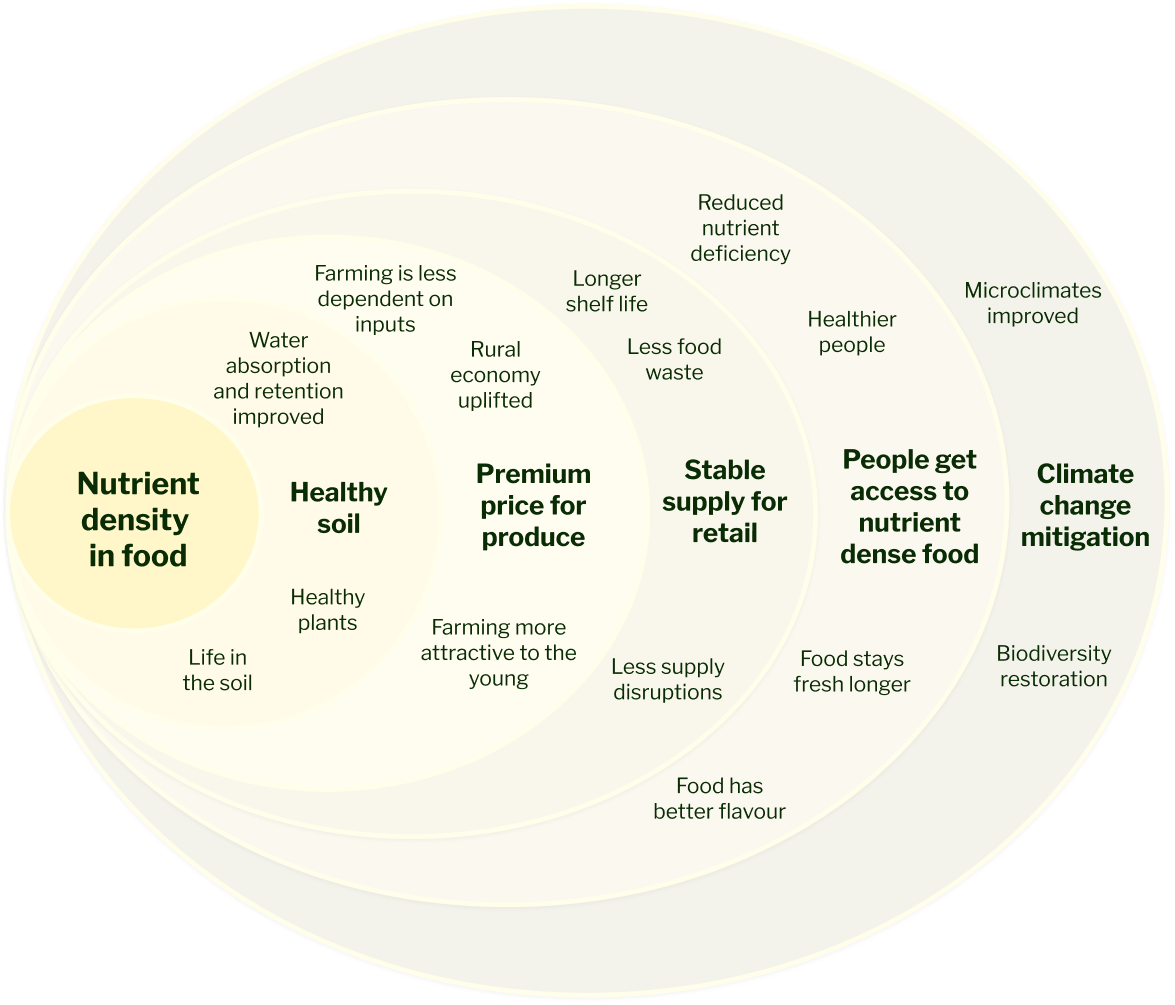
The ripple effect
Food that is full of naturally occurring nutrients has higher value, stays fresh longer, and most importantly, is healthier for people.
That's why we focus on verified nutrient density as a lever for improving global health, rural economies and environmental resilience.
The foundation
Science-based CS frameworks
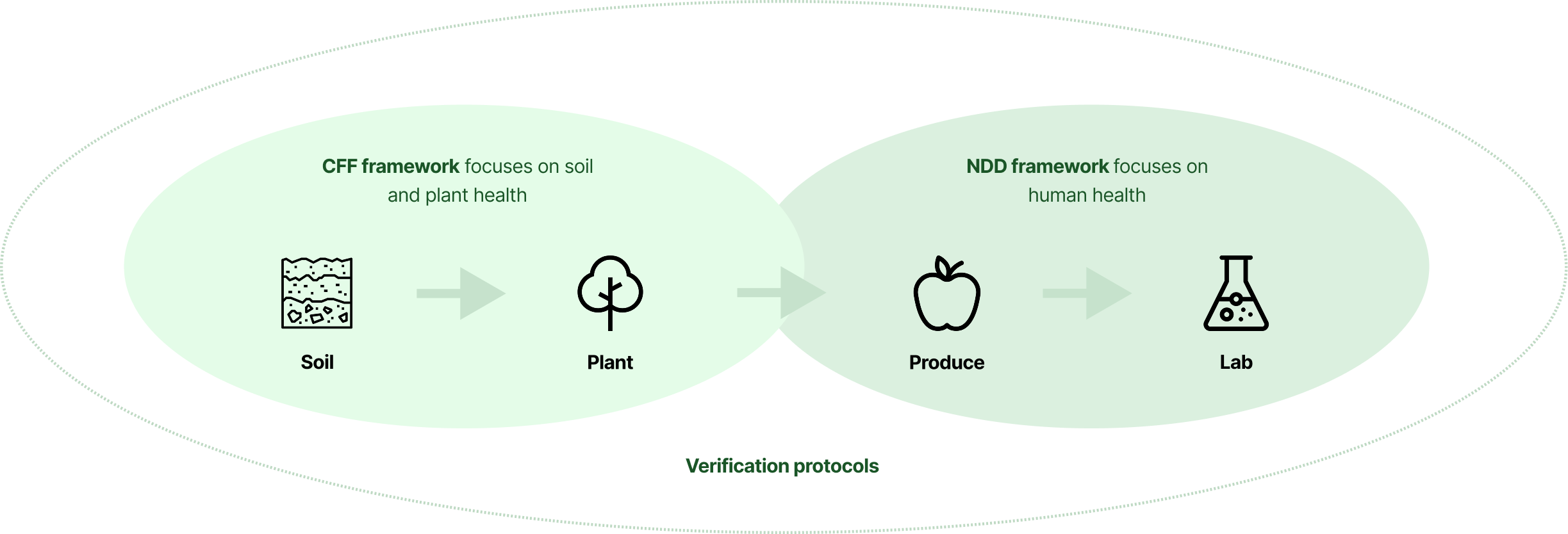
Climate-friendly farming (CFF) framework
Our agronomists, soil scientists and environmental engineers created a methodology to identify if a farm is applying climate-friendly farming practices.
Once the farm is identified as climate-friendly, the same framework is used to keep monitoring the farm's soil and plant health.
Nutrient density definition (NDD) framework
Our scientists created the framework that focuses on the vitamin, mineral and phytonutrient profiles of the produce. The analysis results define the level of nutrient density and its relevance to human health.
The framework compares the results against the benchmark and determines if the product will be marked with the CS quality mark.
Verification protocols for credibility
Independent procedures, audits, metrics and data-quality assurance stand behind every result the CS frameworks produce — on the farms we monitor and on every product that carries the CS quality mark.
How verification works
Verification and monitoring across the supply chain
We are connecting climate-friendly farmers who grow nutrient-dense food with retailers, food processors, catering companies and packaging houses. We monitor the produce from the start and, after we put the CS quality mark on it, ensure quality and traceability.
Farming practice evaluation using farm and remote sensing data
Produce testing in labs and nutrient density evaluation
CS quality mark issued
to a packaging house
Retail monitoring
and data exchange
The quality mark
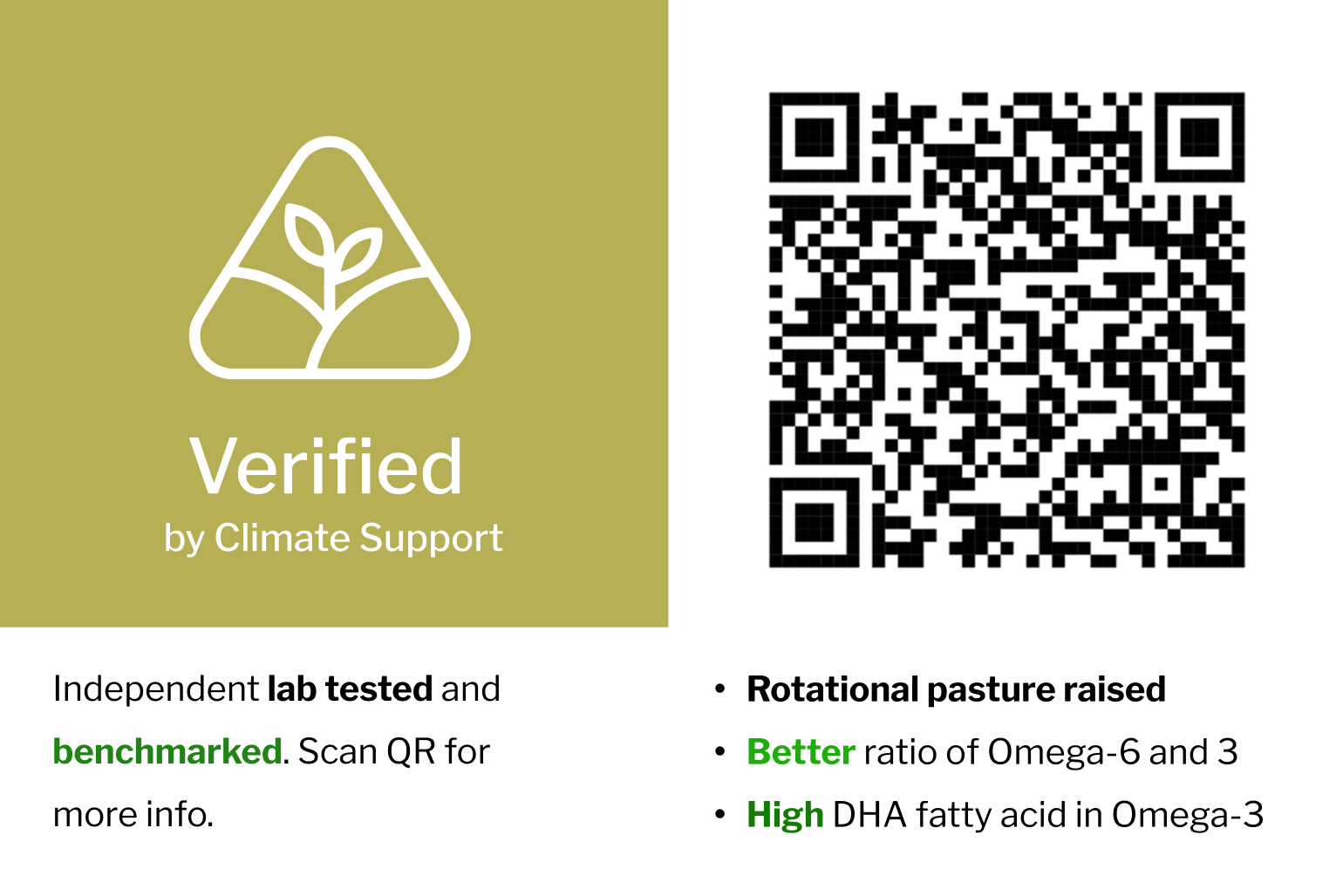
Anatomy of the label
The mark provides confidence that the produce is grown in a climate-friendly way, tested for nutrients and traced from farm to retail.
Climate Support tests samples from every harvest in ISO-certified labs, then analyses all collected data to determine if the produce qualifies for the Climate Support quality mark.
The QR code on each label leads customers to a page with detailed information about the farm, the harvest, and the full nutrient profile of the produce.
Who it's for
Three ways into one supply chain
Growing it
Climate-friendly farming produces nutrient-dense food that qualifies for premium retail pricing.
For FarmersSelling it
A stable supply with longer shelf life, verified quality and traceability proof from farm to fork.
For ShopsChoosing it
Nutrient-dense food delivers the vitamins and minerals that calorie counts don't show.
For ShoppersInvesting in the future of food? Investors →